
Tag: ai

  • Getting Catfished by Reality: AI or not to AI 

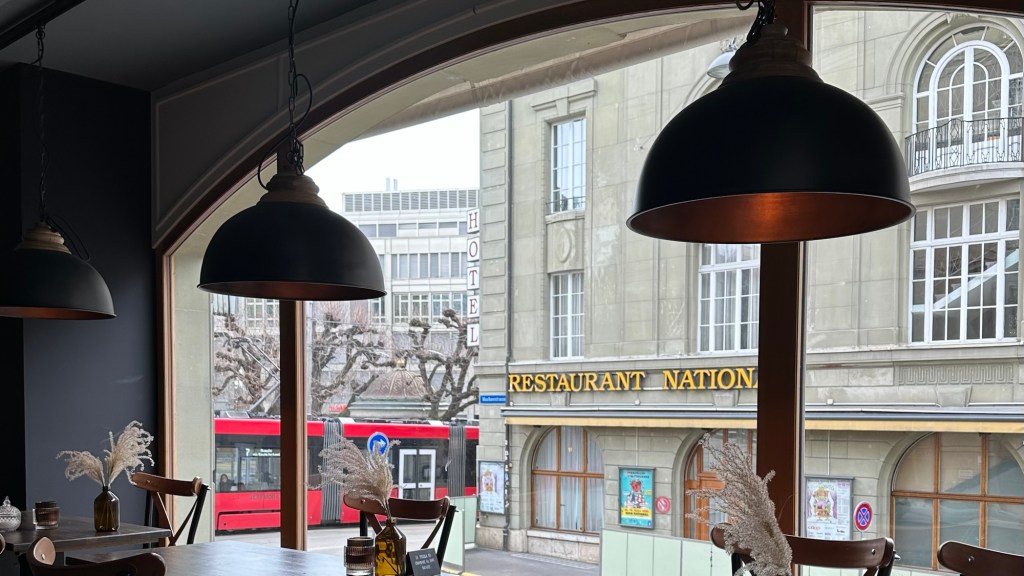
    a very real café

    I couldn’t help but wonder… are we all being catfished by reality now?

    I was doomscrolling on the train today, nothing dramatic, just the usual content: animals doing human things, humans doing questionable things. At some point I laughed at a video that turned out to be AI-generated. It got me. Fully. And I’m Gen Z. Well, late 90s Gen Z, which is basically a micro-generation that remembers dial-up sounds but also owns an emotional support Notes app.

    And that’s when it hit me: if I can’t tell (as a graphic designer with an eye for detail) what’s real anymore… who can?

    We’re currently in this strange in-between era where people still comment “this is AI” under posts. Sometimes correctly. Sometimes wildly incorrectly. Which says less about AI and more about the collective trust issues we were already carrying into the internet like unresolved baggage.

    I thought… how long until we stop caring altogether?

    Will there come a point, maybe months from now, maybe sooner, where we just shrug, scroll, and accept that the content we consume may or may not have ever existed? That the dog might not be real, the couple might not be real, the sunset might be a rendering, and honestly… neither might we, depending on who you ask.

    We already can’t agree on what reality is. Adding AI to the mix feels less like a plot twist and more like the universe saying, “You sure you wanted clarity?

    And here’s the thing: AI itself isn’t the villain. It’s neutral. It doesn’t wake up plotting chaos. It just reflects human intent: like a very advanced mirror with no moral compass. Use it to fix your grammar, brainstorm ideas, speed up your workflow, design better things, think more clearly? Love that. Iconic. Efficient. Very “working smarter, not harder.”

    But humans will always human.

    Which means some people will use it to fish for engagement. Some will use it to fake identities. Some will use it in ways that make you wonder if we deserved high-speed internet in the first place. And no amount of tech optimism changes the fact that we’ll need new rules, new ethics, and probably new boundaries around what we trust online.

    Or -plot twist- maybe this is how social media slowly loses its grip.

    Maybe when we can no longer tell what’s real, the novelty wears off. Maybe we get bored of perfectly generated chaos. Maybe we drift back to words. To books. To long-form thought. To handmade things. To creative labor that takes time, patience, and fingerprints. Maybe authenticity becomes the luxury item.

    Because in a world where everything can be generated instantly, effort starts to mean something again.

    And maybe that’s not the downfall of creativity, but its reset.

    After all, we’ve survived plenty of technological “ends of the world” before. We adapted. We recalibrated. We kept telling stories.

    The tools change. Humans stay human. That’s how we survive. 

  • The Original System of Control

    Somewhere between the first spark of language and the first wall built from stone, humanity made a deal with fear. We traded freedom for structure, and called it civilization.

    From that moment on, every system we’ve created has been an echo of the same impulse: the need to control what we don’t understand. We built religion to escape chaos, capitalism to escape scarcity, and spirituality to escape ego. And every single one eventually hardened into another cage. Bent and hid truth beneath fear, control, and interest.

    That’s the paradox no one likes to look at: Our escapes always become our prisons.

    The Matrix told us this decades ago, that even the idea of freedom can be scripted. Zion, the city of the awakened, was just another form of control. Even the One was an algorithmic anomaly designed to keep the system stable. But love: the code that couldn’t be predicted, categorized, or controlled, broke the loop. Neo and Trinity didn’t just escape the Matrix; they transcended it. They remembered that freedom doesn’t come from destroying the system, but from seeing through it.

    That’s the same lesson humanity keeps missing. Every time we evolve, we just build a prettier version of the cage. We replace one god with another, one ideology with its opposite. The binary itself: good and evil, light and dark, awakened and asleep, is the real prison.

    Look back far enough, and you’ll see the same pattern in our origin story. There wasn’t just one kind of human.

    There were many: sapiens, neanderthals, denisovans, coexisting for a time. And then, only one survived.

    We like to call that evolution, but maybe it was the first act of separation. The first Matrix. The moment humanity decided it was safer to dominate than to coexist.

    Since then, we’ve just been building more sophisticated versions of that original illusion, more elaborate systems of “us vs. them.” From tribes to nations, from gods to markets, from religions to algorithms. We keep building walls around infinity, manipulating circumstances we cannot understand to fit it in structured boxes and dogmatism.

    But the truth was never meant to be contained. It breathes, it mutates, it dissolves structures. It’s not the light or the dark, it’s the pulse between them.

    Maybe the real awakening isn’t more division. Maybe it isn’t deciding which sub-category of the same human species you belong to. Maybe it’s accepting that we are all one, connected and having a human experience all together. Maybe the point is unity through acceptance

    That’s when love reclaims its original function: not as emotion, not as attachment, but as the frequency of wholeness.

    And maybe that’s all “The One” ever meant, the remembrance that we were never divided to begin with.