Month: January 2026

  • Balance Isn’t Optional

    I’ve lived long enough to notice one undeniable rule of this galaxy: balance is not optional. It’s not a suggestion. It’s not a vibe. It’s the law.

    Look around. The planet is a perfectly choreographed group project: sun and moon, tides, seasons, ecosystems that somehow work without Google Calendar. Whether you call it God, the Universe, Divine Masculine and Feminine energy holding hands in the sky, or just very impressive physics: the theme is the same. Harmony. Balance. Checks and balances everywhere.

    So… why would humans be the exception?

    We’re literally the only species that looks at balance and goes, “No, I think I’ll fight this.” We resist, control, dominate, argue, exhaust ourselves, and behave like there’s a backup planet waiting for us once we ruin this one. (There isn’t. Even if you believe in aliens. You’re still here. On Earth. Congratulations. Earth school is in session.)

    But let’s zoom in, because we’re not here to fix the world today. We’re here to talk about balance in our tiny, dramatic, salt-speck lives.

    Here’s what I’ve noticed: life runs in cycles, and they come in pairs. For every isolated phase, there’s a social one. For every grind-and-suffer era, there’s an ease-and-flow era. For every loss of something unaligned, there’s a replacement that actually fits. For every “what the hell was that,” there’s a quiet win that sneaks in later.

    Nothing is random. Annoying? Yes. Random? No.

    We don’t actually own anything: not people, not outcomes, not moments. We’re just visiting this exact point in time, which somehow exists alongside the past and the future like a cosmic multitasking queen. Life is a sequence of lessons, tests, and occasional rewards (sprinkled in just enough to keep us from fully losing our minds), and of course reaching the sweet spot in alignment that our spoken words and thoughts start manifesting in reality without sitting on HR’s desk for approval for ages.

    And life has preferences. It loves emotional regulation. It loves when we feel things instead of suppressing them. It loves release, letting go, trust, faith. It loves when we stop trying to micromanage the universe like we’re its unpaid intern.

    Which brings me to the real question: why force anything?

    Why contort yourself into alignment with something that clearly isn’t aligned with you? Why stay quiet when speaking up would clarify everything? Why bend yourself into shapes your soul never agreed to, instead of trusting that what’s not meant for you will be replaced (cleanly, calmly) by what is?

    Boldness, I’ve learned, isn’t recklessness. It’s clarity with a backbone.

    Life is weird. We’re souls having a human experience, and let’s be honest, some of us read the instructions upside down. While most people arrived knowing how to be human, some of us had to learn the basics late: Oh. I have a body. I live here. I’m not meant to float away at the first inconvenience.

    So lately, I’ve been choosing boldness. Not the loud kind, the grounded kind. The kind that isn’t afraid to lose, because it knows it won’t lose what’s meant for it. And if another test cycle shows up? Fine. I plan to pass it this time, not by suffering harder, but by integrating what I already learned.

    Balance always collects its dues. The only real choice we have is whether we cooperate… or exhaust ourselves pretending we know better than the laws of this place we live in. 

    Or perhaps we just need more Libras who have awareness to save the world.
  • Love is Like Jumping into the River and Surrendering to the Current

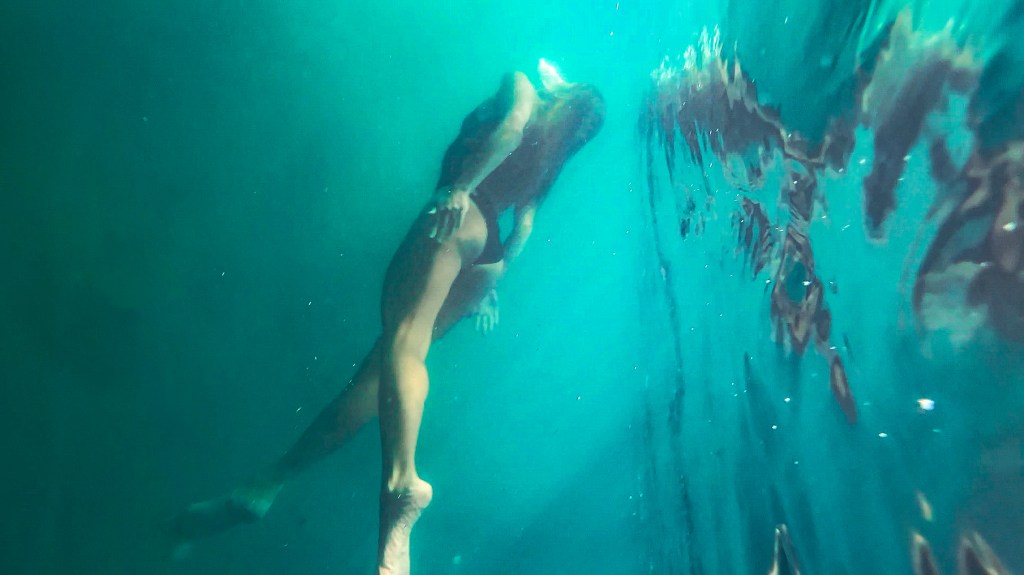
    Love is often described as a leap: a jump, a plunge, a cinematic moment where someone throws caution (and apparently their nervous system) to the wind. But that metaphor only works for people who have never hit the riverbed at full speed. For the rest of us, the ones who loved deeply and had to swim back to shore alone with a couple of broken bones after almost drowning… Love doesn’t look like jumping anymore. It just looks like water. And a quick internal risk assessment.

    After emotional trauma, most people don’t become cold, we become careful. The desire to love is still there, alive and well, occasionally even dramatic. What’s gone is the ability to dive in without checking the depth, the current, and whether the other person is actually planning to jump too… or just standing on dry land… or cutting the ladders to trap you in.

    Dating after trauma creates a strange paradox. On paper, everything looks good. The connection is easy. The conversation flows. No red flags. No chaos. No emotional whiplash. And yet, internally, there’s a full-time analyst clocking every pause, every delayed reply, every “hey” that feels slightly too neutral for comfort. Not because something is wrong, but because experience has taught the nervous system that danger is often quiet and well-dressed.

    This is where the river metaphor becomes useful. Trauma doesn’t make someone afraid of water, it makes us afraid of depth without mutuality. In the past, many people didn’t just jump into love; we jumped alone. We dove in while the other person stayed at the edge, watching. We trusted words that weren’t matched by actions. We swam while the other person floated away. Some of them threw rocks that hit our head. We collapsed under water. They walked away when we drowned. That kind of experience doesn’t just hurt… It rewires how safety is assessed.

    So now, standing knee-deep in something new, the hesitation isn’t about fear. It’s about wanting to see shared movement. About waiting for a signal that this isn’t another solo swim disguised as a duet. About not mistaking intensity for intimacy, or chemistry for emotional availability, lessons that, unfortunately, are usually learned the hard way.

    Modern dating doesn’t help. In a world of delayed replies, ambiguous intentions, endless options, and low accountability, the traumatized nervous system has plenty of material to work with. Silence becomes a story. Dating apps become a reason not to trust by default. What if I surrender to the current, start floating, and he’s out there dipping his toes in two rivers at once? 

    Healing doesn’t mean forcing trust or pretending not to notice things. It means changing how trust is built. Not through grand declarations or constant reassurance, but through repetition, consistency, and the quiet reliability of someone who shows up again and again. Someone whose actions slowly match their words, without needing a dramatic monologue.

    The goal isn’t to jump again. The goal is to learn how to walk into the river without abandoning yourself. To understand that love doesn’t have to feel like a near-death experience to be real. That safety is attractive. That steadiness is deeply romantic, even if it doesn’t make for a great trauma-bond origin story. I already have one of those. It’s enough for a lifetime, and preferably the next. 

    And maybe that’s the real shift. Not becoming fearless, but becoming self-loyal. Not diving in to prove you can, but waiting until someone holds your hand, walk into the river with you, and float together. One surrendered step at a time. Soft, safe, warm, deliberate, and consistent. 

  • Getting Catfished by Reality: AI or not to AI 

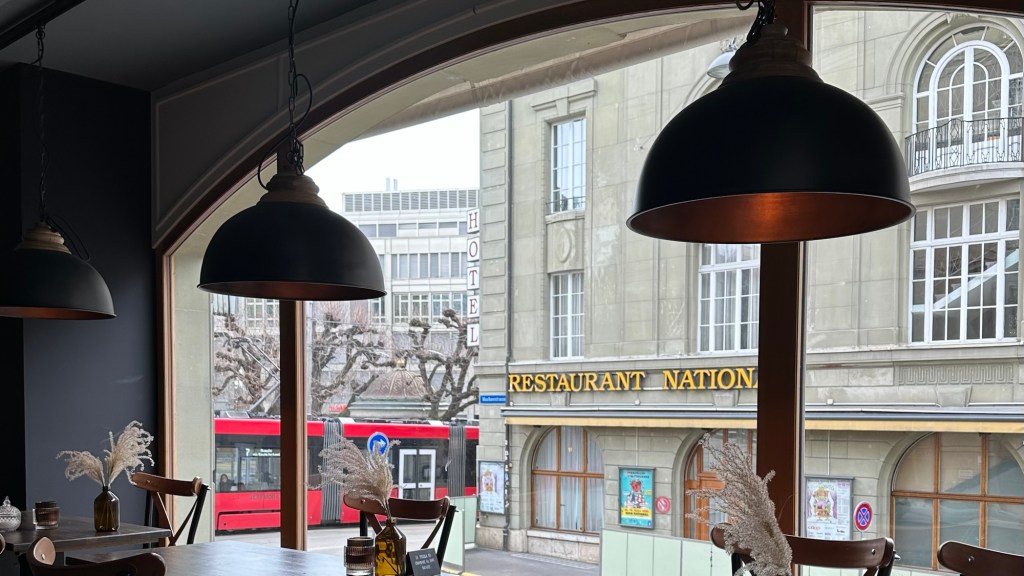
    a very real café

    I couldn’t help but wonder… are we all being catfished by reality now?

    I was doomscrolling on the train today, nothing dramatic, just the usual content: animals doing human things, humans doing questionable things. At some point I laughed at a video that turned out to be AI-generated. It got me. Fully. And I’m Gen Z. Well, late 90s Gen Z, which is basically a micro-generation that remembers dial-up sounds but also owns an emotional support Notes app.

    And that’s when it hit me: if I can’t tell (as a graphic designer with an eye for detail) what’s real anymore… who can?

    We’re currently in this strange in-between era where people still comment “this is AI” under posts. Sometimes correctly. Sometimes wildly incorrectly. Which says less about AI and more about the collective trust issues we were already carrying into the internet like unresolved baggage.

    I thought… how long until we stop caring altogether?

    Will there come a point, maybe months from now, maybe sooner, where we just shrug, scroll, and accept that the content we consume may or may not have ever existed? That the dog might not be real, the couple might not be real, the sunset might be a rendering, and honestly… neither might we, depending on who you ask.

    We already can’t agree on what reality is. Adding AI to the mix feels less like a plot twist and more like the universe saying, “You sure you wanted clarity?

    And here’s the thing: AI itself isn’t the villain. It’s neutral. It doesn’t wake up plotting chaos. It just reflects human intent: like a very advanced mirror with no moral compass. Use it to fix your grammar, brainstorm ideas, speed up your workflow, design better things, think more clearly? Love that. Iconic. Efficient. Very “working smarter, not harder.”

    But humans will always human.

    Which means some people will use it to fish for engagement. Some will use it to fake identities. Some will use it in ways that make you wonder if we deserved high-speed internet in the first place. And no amount of tech optimism changes the fact that we’ll need new rules, new ethics, and probably new boundaries around what we trust online.

    Or -plot twist- maybe this is how social media slowly loses its grip.

    Maybe when we can no longer tell what’s real, the novelty wears off. Maybe we get bored of perfectly generated chaos. Maybe we drift back to words. To books. To long-form thought. To handmade things. To creative labor that takes time, patience, and fingerprints. Maybe authenticity becomes the luxury item.

    Because in a world where everything can be generated instantly, effort starts to mean something again.

    And maybe that’s not the downfall of creativity, but its reset.

    After all, we’ve survived plenty of technological “ends of the world” before. We adapted. We recalibrated. We kept telling stories.

    The tools change. Humans stay human. That’s how we survive. 

  • Cold Exposure, Nervous Systems & Why I Voluntarily Freeze for Fun

    There is a very specific cosmic joke reserved for people who enjoy discomfort. In my case, it’s called cold water immersion or going out undressed in freezing temperatures to feel the icy air nibble on my skin. While normal people are inside sipping tea at -4°C, I went swimming in the Black Sea for fun, and then sipped my herbal tea in my thermos at the beach. 

    There is actual science behind this madness, and no, I didn’t arrive here informed, researched, or wearing a lab coat. I stumbled into it the intuitive way: a few years ago I noticed that cold air and cold water calmed my very fried nervous system almost instantly. That was enough proof for me. 

    Let’s dive into the cold waters now.  

    Your nervous system isn’t weak. It just forgot how badass it is. It basically runs on two modes:Sympathetic (fight, flight, panic, existential dread, “why did I send that text”) and Parasympathetic (rest, digest, calm, actual peace).

    Most of us live permanently in the first one.

    Cold exposure forces a controlled shock. It rips you out of autopilot and drops you straight into regulated survival mode. And when you come out of that icy panic bubble alive, your nervous system goes, “Oh. We survived. Cool. Guess we can relax now.” That’s vagus nerve activation, baby. Emotional regulation, improved stress tolerance, less dramatic reactions to life in general.

    Cold water is basically emotional push-ups. When it hits, your body releases endorphins, norepinephrine, and adrenaline: a chemical cocktail that starts as “this is illegal” and ends as “I can handle literally anything now.” Basically my favorite type of cocktail. Too bad they don’t serve it at regular bars. Who wants to open that type of bar with me? Anyhow, over time, your system remembers this. Future stressors feel smaller because your body knows it survived worse.

    And here’s the important part: emotional regulation isn’t just talk therapy. You can journal until your wrist cramps, but if your body doesn’t know how to handle stress, your nervous system won’t either. Cold exposure yanks you out of your head and into your body. Thought spirals stop. Panic becomes manageable. You’re present instead of catastrophizing your entire existence.

    Cold + conscious breathing is where the bliss happens. Your heart races, your breath spikes, muscles tighten. that’s automatic. But if you slow your breathing instead of panicking, and relax your clenching muscles, you’re literally training your brain to stay calm under pressure. That’s neuroplasticity. Every time you relax enough that you don’t shiver, your nervous system levels up.

    And no, this doesn’t make you emotionally numb. Quite the opposite. It builds emotional resilience. You still feel deeply, you just don’t collapse every time life pokes you with a stick. Perhaps soft core, hard shell in action. Which is one of my favorite phrases.

    Because mental strength isn’t a personality trait. It’s a muscle. And just like any muscle, that can be trained. Cold water is nervous system boot camp. Emotional fastball training. A reminder that you can face discomfort, breathe through it, and come out clearer on the other side.

    In my case, cold exposure has evolved from “mental health experiment” to full-blown personality trait. Somewhere between frozen swims and icy air nibbling at my skin, my brain decided this is how we get dopamine now. Is it an addiction? Possibly. But there are worse addictions than voluntarily freezing yourself to feel alive.

    At this point, I’m just hoping to find equally unhinged humans who think a cute date involves cold water, deep breaths, and laughing hysterically afterward. 

    If that’s wrong, I don’t want to be right.